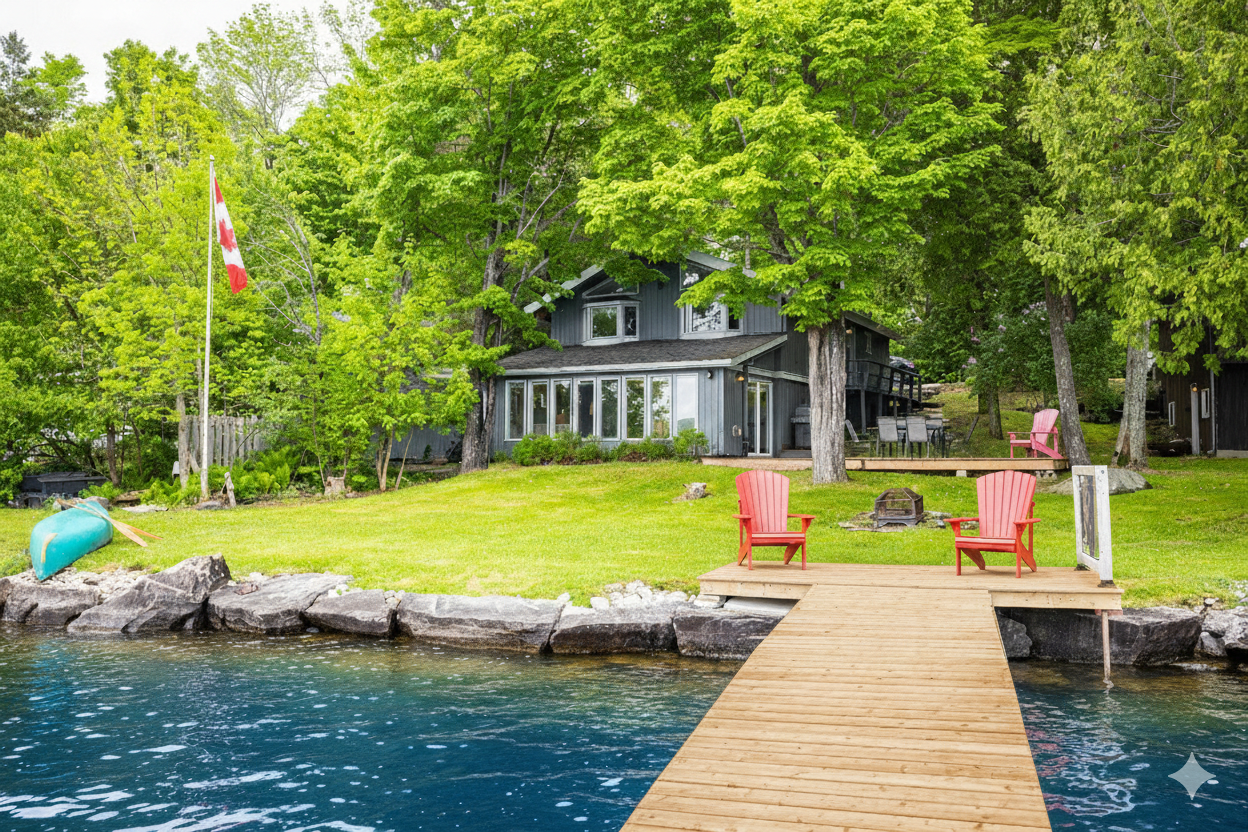
For many Ontario families, buying a cottage is more than a real estate transaction. It is about lifestyle, legacy, and long summer weekends on the water. But in 2026, the big question is this: Is it finally a buyer’s market in cottage country?
If you are planning to finance your purchase, the answer matters even more. Let’s break this down into two parts. First, we will look at what is happening in Ontario’s cottage market. Then we will walk through how mortgages for recreational properties work, and what you must consider to qualify confidently.
What’s Happening in Ontario’s Cottage Market?
Ontario’s cottage regions — including Muskoka, Kawartha Lakes, Haliburton Highlands, and Prince Edward County — experienced an extraordinary surge during the pandemic years. Urban buyers rushed north as remote work became common, pushing prices up dramatically between 2020 and 2022.
Now the landscape has shifted.
Prices Have Stabilized — and in Some Areas, Softened
After interest rates rose sharply from historic lows, many discretionary buyers stepped back. Cottage properties, unlike primary residences, are often considered lifestyle purchases. When borrowing costs increase, buyers become more cautious.
As a result:
- Inventory levels have increased in many cottage regions.
- Days on market are longer compared to peak pandemic activity.
- Sellers are more open to negotiation, especially for higher-priced waterfront homes.
This does not mean prices have collapsed. Premium lakefront properties in Muskoka or high-demand lakes still command strong values. However, bidding wars are far less common, and buyers now have leverage to negotiate price, conditions, and closing timelines.
In practical terms, this resembles a balanced-to-buyer-leaning market, especially in the $700,000 to $1.5 million range, where financing sensitivity is highest.
Demand Is Still Strong — But More Rational!
Cottage demand did not disappear. It simply normalized.
Many buyers today are:
- High-income households from the GTA.
- Business owners looking for personal use plus rental potential.
- Families planning multi-generational ownership.
However, today’s buyers are more analytical. They are asking questions like:
- Can I carry this mortgage if rates increase again?
- What is the rental income potential?
- How liquid is this property if I need to sell?
This rational mindset is one reason the market feels calmer.
Inventory Has Improved
During the pandemic, there were very few listings. Buyers had almost no choice and often purchased without proper inspections.
Today, there are more options. This means:
- You can compare properties.
- You can include financing conditions.
- You can perform full inspections, including septic, well testing, and water quality.
For cottage buyers, this is extremely important. A property that does not meet lender standards can derail financing at the last minute.
Waterfront Still Commands a Premium
Not all cottages are equal. Properties with:
- Year-round road access
- Proper septic systems
- Drilled wells
- Municipal services
- Four-season insulation
are significantly easier to finance and resell.
Seasonal cabins with limited access or no winterization may trade at lower prices, but they are also more difficult to finance. We will discuss this in detail.
So, Is It a Buyer’s Market?
If we define a buyer’s market as one where:
- Buyers can negotiate.
- There is less emotional bidding.
- Conditions are accepted.
- Prices are no longer rapidly climbing.
Then yes, many parts of Ontario cottage country are leaning toward buyers — particularly compared to the frenzy of 2021.
However, desirable lakes remain competitive. The best properties still move quickly and close near asking price.
The opportunity today is not about “cheap” cottages. It is about more reasonable pricing and more strategic purchasing power.
Getting a Mortgage for a Cottage — What You Must Know
Financing a cottage is not the same as financing your primary residence. Lenders view recreational properties as higher risk because they are secondary homes and sometimes harder to resell.
Understanding eligibility rules can save you stress and potential deal collapse.
1- Four-Season vs. Seasonal Cottages
From a lender’s perspective, the biggest question is whether the property is considered a four-season home.
Most major banks prefer cottages that:
- Have year-round road access.
- Are winterized and insulated.
- Have permanent heating.
- Have potable water.
- Have an approved septic system.
If the cottage meets these standards, it may qualify under standard mortgage guidelines with as little as 5% down (if owner-occupied and meeting insurer rules). The property must be suitable for year-round occupancy, have year-round vehicular access, and be intended for personal use. It cannot be a seasonal cottage, off-grid cabin, or commercial rental to be eligible for default insurance for recreational properties (second homes) in Ontario.
Seasonal cottages often require:
- Larger down payments (20% to 35%).
- Higher interest rates.
- More restrictive lending policies.
Before you fall in love with a rustic cabin, confirm its classification.
2- Down Payment Requirements
Down payment rules depend on:
- Whether the property is owner-occupied (not rented full-time).
- Whether it is a four-season or seasonal.
- Purchase price.
If insured, the minimum down payment follows standard rules:
- 5% on the first $500,000.
- 10% on the portion above $500,000.
However, many recreational properties require 20% down because they do not meet insurer guidelines.
As a buyer, you should prepare for at least 20% down unless your mortgage advisor confirms eligibility for insured financing.
3- Affordability and Qualification
Lenders assess affordability using:
- Gross Debt Service (GDS)
- Total Debt Service (TDS)
The cottage mortgage payment is added on top of your primary residence obligations.
Even if rental income is expected, lenders may only use 50% to 80% of that income for qualification purposes, depending on the program.
This means you must comfortably qualify for carrying both properties. Consider getting a mortgage pre-approval to understand your financial position better.
4- Interest Rate Sensitivity
Cottages are more sensitive to rate changes because:
- They are discretionary assets.
- They are often higher loan amounts.
- They are not essential housing.
Ask yourself:
- Can I carry this payment if rates rise 1% to 2%?
- Is my business income stable?
- Would this affect my retirement savings or children’s education funds?
A cottage should enhance your life — not create financial anxiety.
5- Rental Income Potential
Many buyers hope to offset costs through short-term rentals.
However:
- Not all municipalities allow Airbnb-style rentals.
- Lenders may limit how much rental income counts toward qualification.
- Insurance premiums may increase for rental use.
Before relying on rental income, confirm:
- Local bylaws.
- Zoning.
- Realistic seasonal occupancy rates.
- Property management costs.
Rental income should be considered a bonus, not the foundation of your affordability plan.
6- Property Condition and Appraisal
Lenders will order an appraisal. Appraisers pay close attention to:
- Shoreline stability.
- Flood risk.
- Septic condition.
- Well quality.
- Foundation integrity.
Properties on private roads or with shared access agreements may face additional scrutiny.
Having a strong purchase agreement with inspection clauses protects your mortgage approval.
7- Long-Term Reasonability
From a wealth management perspective, consider:
- Is this part of a long-term legacy plan?
- Will you use it enough to justify costs?
- Does it diversify or concentrate your net worth?
Cottages can appreciate over time, but they are not guaranteed investment properties. Liquidity can be slower than urban real estate. Use mortgage leverage wisely to build family wealth.
Final Thoughts: A Strategic Opportunity — If Done Right
The current Ontario cottage market offers something rare: time to think.
You can negotiate. You can include conditions. You can structure your mortgage strategically.
But financing a cottage requires planning. The property must meet lender standards. Your income must support two properties. And your financial life must remain balanced even if rates fluctuate.
If approached carefully, buying a cottage today can be both emotionally rewarding and financially responsible.
The key is preparation:
- Confirm property eligibility before offering.
- Run mortgage affordability scenarios at higher rates.
- Plan for realistic rental income.
- Keep sufficient liquidity after closing.
A cottage should feel like freedom — not financial pressure.
If you structure the mortgage correctly and buy within reason, this may indeed be one of the most supportive market environments cottage buyers have seen since before the pandemic surge.
And that is an opportunity worth exploring thoughtfully.